
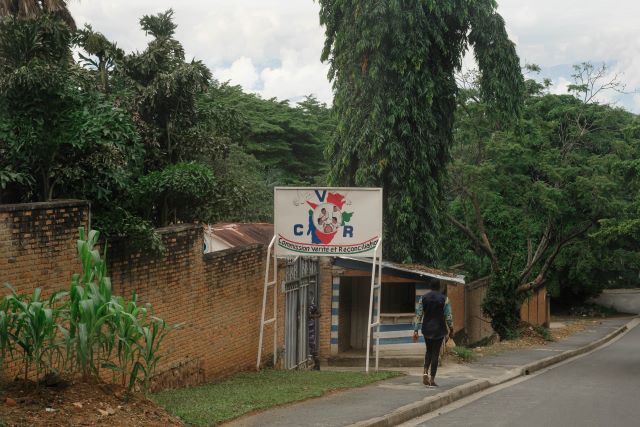
In December of 2023, Northeastern Illinois University students and faculty traveled to Burundi to conduct research for the Genocide and Human Rights Research of Africa in the Diaspora (GHRAD) Center. Over the course of sixteen days, this modest group of individuals diligently worked together to reveal a hidden piece of history that continues to plague Burundians every single day. The main objective of this endeavor was to gather as many survivor testimonies as possible from those who endured the extremely stifled and shrouded 1972 Genocide of Burundi.
Survivors were forbidden to mourn the death of their loved ones and persecuted if they spoke about the brutal massacre. Educated Hutu members of the community were targeted, hand-selected, arrested, slaughtered, and dumped into mass graves. This tragedy did not happen overnight. This tragedy did not happen by chance. This tragedy was a strategic and gruesome plan that was specifically created to eliminate the entire Hutu ethnic group.
Now, more than 50 years later, GHRAD is recording their stories allowing victims to finally shatter their silence. The testimonies collected by the GHRAD Center at NEIU are pivotal in creating a research compilation in the form of an Oral History Archive for the Library Digital Commons website.
This multimedia exhibit contains graphic images and sounds that some viewers may find disturbing. Viewer discretion is advised.






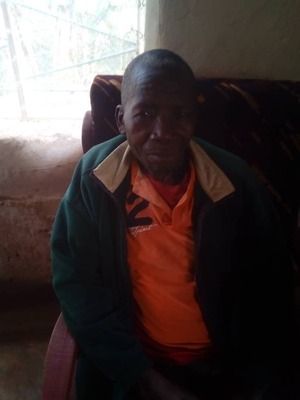




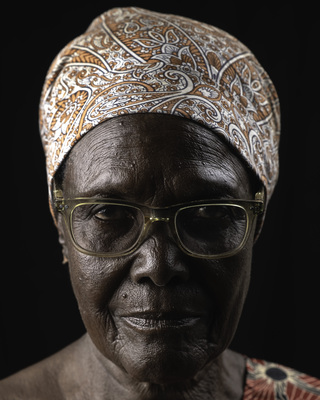




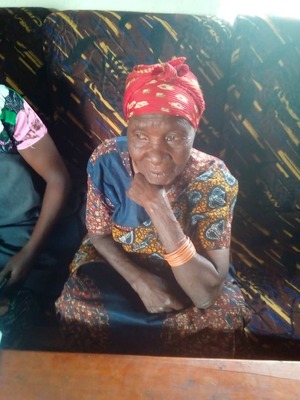

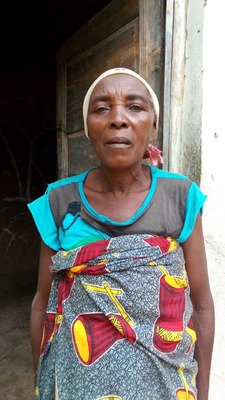








-
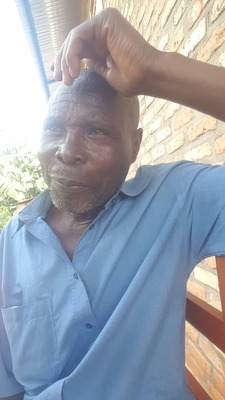
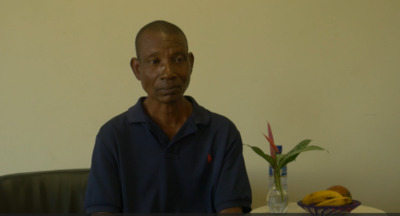
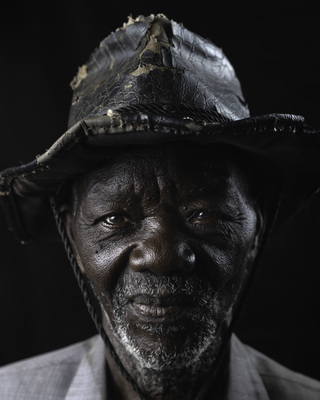
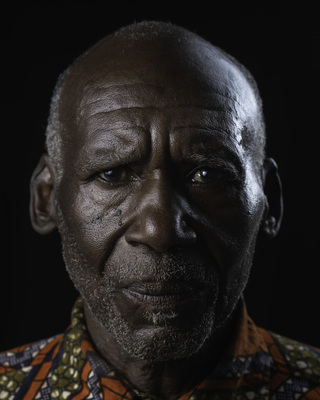
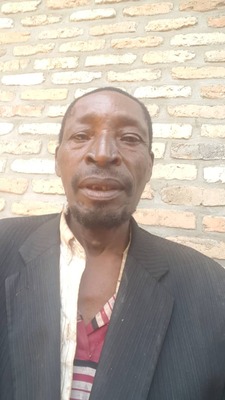
Nibigira, Bernard
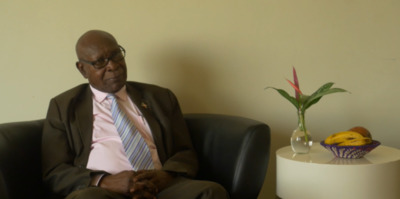
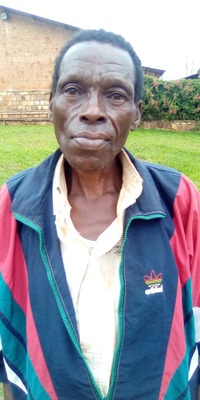
Bernard Nibigira
Bernard Nibigira, also known as Ntibankange, was a nickname that was given to him at his administration sector job for protection. He attended school until the 6th grade and dropped out, due to the lack of school fees and the political state of the country.
Government workers, including teachers, were forcefully taken by soldiers in Toyota vehicles. Perpetrators initially targeted teachers and later expanded to other civilians. The interviewee's own family was affected, with several members, including teachers and a soldier, being taken away. Bernard’s brother, Tharcisse Mugabonutwiwe, was among those arrested and taken to a place called Mukenke. The family was not allowed to visit him, and eventually he never returned. Other family members, such as a teacher named André Baranyizigiye and a cousin named Badadi, were also killed. The interviewee's brother, who was a mason, was among those who did not survive as well.
Family members who survived were labeled as traitors and treated unfairly by others in the community. The interviewee was even publicly humiliated by local authorities, where they made him undress in a communal office due to assuming the soccer jersey he had on was some sort of government uniform.
He describes how those arrested were killed at night, either by stabbing or hitting with hammers. The bodies were buried in mass graves, with pits being dug by machinery in places like Karama and Vumbi.The perpetrators consisted of local authorities and soldiers who would round up people based on lists and transport them to communes where they were taken to be executed. The interviewee describes how the arrested individuals were transported and the bodies were disposed of.
-

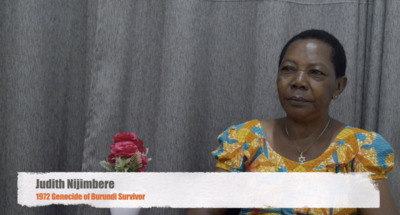
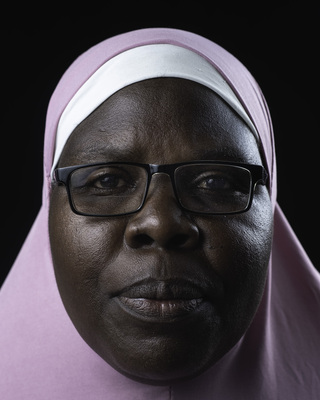
Nijimbere, Judith
Judith Nijimbere
Judith Nijimbere was born in 1958 in Bururi commune and province. In Burarana village, it borders Muzima. Before the 1972 tragedy, her family was really doing well. They were surprised when that tragedy began, because they were living peacefully.
In 1972, Judith had finished the seventh grade; she dropped out and she stayed home. She got married after three years, she didn't get a job in the government.
When tragedy broke out, they fled from school, she was studying at Lycée of Bururi. So many lives were lost ; in her family, there were about three important relatives killed. Among them were two uncles who were arrested from a vigil place, they took them away, they were twelve men who were dumped in the pit of Muzenga. Those uncles who were taken away were the ones who provided means of living to Judith and her siblings, they did different kinds of business. After the 1972 tragedy Judith didn't return to school; she dropped out of school.
There was a vigil place near their home, they rounded all twelve men. They found the pit at Muzenga full of dead bodies. One man informed them about it, he escaped from that pit because it was full and he stayed in hiding for three days on the river; he died very late.
Those who killed them were even mentioned. There was a man from the gendarme who came from far away in Vyanda commune, then he went there after being called by others [native of village] to arrest them and to bring them there. After killing people, they plundered cows and other things. Among perpetrators, there was Makakaza, he was a soldier and he came from Vyanda.
At school, they didn't know exactly what it was. If a Hutu passed a national test in school, they could find some contradictions; they then took the grades of the Hutu and attributed it to a Tutsi; so he passed the test though you would see he was not intelligent.
-
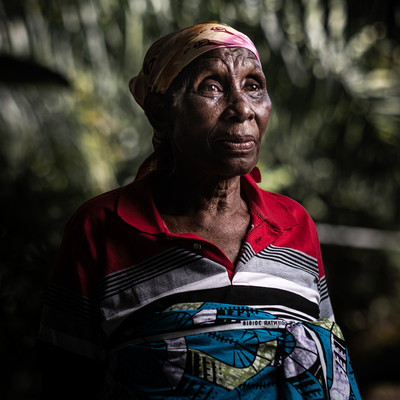
Nimpagaritse, Immaculée Marie Makurata
Immaculée Marie Makurata Nimpagaritse
Marie Immaculée Nimpagaritse, survivor of 1972 killings, describes the tragedy she went through at that time. She first lost her father, Pierre Ngendabanka and after she was arrested, jailed and got a chance to escape. She finally fled to Congo and moved to Rwanda. Her father was transported away in a military truck from his work at Nyabiraba, together with Nyabiraba priest Thomas Samandari. And after, they took away her Uncle named Stephano Bahuwukomeye, the Director Lucien Ndabemeye and another teacher named Salvator Ruvumbagu, and another one Joseph.
-
Nimpaye, Ronjino
Ronjino Nimpaye
When the crisis began, Longin was at Songa. At the beginning they said that they were the strange people from Rumonge. Very short with big noses with marks on their bodies walking with machetes. They were called May Mulele. The authorities told people to go to fight against them. After that, they were together, Hutus and Tutsi, in a good relationship. On April 29th their father Hutu and Tutsi all neighbors said let’s go fight against those Mai mulele. They began to do the patrols. On the following day they said let’s check people who have marks on their bodies. Then the Tutsi began taking away Hutus. Those who were arrested were taken to the zone where they were tied up, beaten, imprisoned, and later killed. The dead bodies were then dumped in pits dug near the zone office. The mass graves were recently exhumed, the family members of Longin showed them the location of those mass graves. To arrest them, the perpetrators told the victims to go to the chief of the zone to be interrogated and come back but they did not come back. Their Families waited for them to come back in vain, they had disappeared.
They killed the father of Ronjino after they called him to the zone. When he arrived at the zone, the zone chief, Barinzigo Yohani, hit him in the neck with a machete, they beat him, stripped him of his clothes and put him in jail. Later, they saw his clothes worn by a police officer named Makobero Patrice. Ronjino does not know where they buried his father because a truck came from Matana commune packed the dead bodies and transported them away. They do not know where they dumped them.
The next day they came home to loot the victims' belongings, namely pots and pans, rice, beans, clothes that he had not taken to the market because that was what he was selling. A neighbor named Gasiyano came with other soldiers to loot the house. In the evening after they were robbed, they told them that they were going to burn their house and because they were Mai mulele, that day they spent the night in the forest. They also took away the machine they had at home and what his father sold in the Manyoni business center, at the market. In 1993 there was also a civil war and some people who had killed his father came back to loot again what they had in the house. Even the machine Ronjino bought later was taken away again. They also killed his brother who was at Bujumbura; he was killed together with another person called Ntitanguranwa Marcel. They killed them from Pagdas[a tourist place in Bujumbura downtown] because Ntitanguranwa was studied in Russia. They also lost many of their Hutu neighbors; they were killed in the same tragedy. And those they lost did not bury or organize a mourning period.
-

Nindamutsa, Jereturuda
Jereturuda Nindamutsa
Jereturuda was 18 years old when she got married. After a year, she gave birth on Saturday April 29th, 1972 the same day the tragedy began. On that day people began to spread rumors that they heard muleles at Ndago hill and they began to run away. Jereturuda stayed in the house with a newborn baby in postpartum recovery. The next Thursday the perpetrators came home to arrest her husband. It was the last time to see her husband, she didn’t mourn. Her parents in law comforted her and took care of her child. She raised her child for four years after she went to marry again. But she lost her second husband again in the tragedy. Unknown perpetrators took away her second husband because even after …72 they kept on rounding up Hutus one by one. In …72, they also killed her brother-in-law called Sylvere. To arrest him, they told him to go to the Manyoni zone to be interrogated. He went and did not come back. In that time, Hutus stayed together but they had a bad relationship with Tutsis. He lived a bad life and later on, she remarried a third time, she had other children. She was still sad at the time of the interview.
-

Nindorera, Aruberi
Aruberi Nindorera
Aruberi began elementary school in the early 1980s and completed his national exams around 1989-1990. He attended primary school in Nyagatovu, moved to Marangara in Ngozi province, and then went to secondary school at Collège Buye in Burengo. He pursued a career in teaching and worked for the government, initially as a teacher, then in municipal roles, and returned to teaching. He currently teaches in Vumbi.
The interviewee was very young during the 1972 massacres, but he shared insights based on his mothers witness to the tragedies. His father, who was Tutsi but had a Hutu mother, was targeted due to his perceived association with Hutus and his size, which was uncommon for Tutsis.
His father, working in Kirundo, was accused of helping "traitors" and was killed. The family lived in a refugee camp, then moved to Nyagatovu.
The interviewee recounted that during the 1972 killings, Tutsis, including some who were mistakenly identified as Hutus or suspected of supporting "traitors," were also targeted.
Specific individuals who faced these tragedies, included his father and other Tutsis who were killed or disappeared under similar circumstances. Nindorera described his father's killer as Ndabaneze Laurent, who was a lieutenant in Kirundo, and reportedly involved in the violence and later killed in Vumbi.
-
Niyiragira, Venant
Venant Niyiragira
Venant Niyiragira was a fifth grader when the 1972 Genocide of Burundi began. He vividly remembers returning home from school and hearing that his father had been killed. Niyiragira said a close friend of the family witnessed a truck filled with soldiers force his father into the vehicle. The same friend told Niyiragira it might be safer for him to wear a dress as males were prevalently targeted by the militia. Niyiragira said at this time, soldiers were using hammers to smash their victim’s skulls in half before dumping their bodies, dead or alive, into mass graves. He and his siblings fled to the Congo to escape the violence. They slept outside for days until the Congolese took pity on them and welcomed them into a refugee camp. Niyiragira said he could never return to school again because he had too much hate in his heart.
-
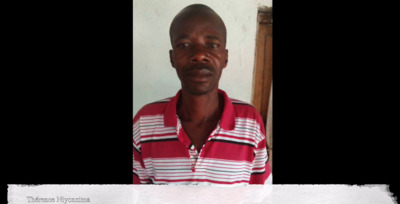
Niyonzima, Therence
Therence Niyonzima
Therence Niyonzima witnessed his father die after he took a spear to his side.
After he watched his father die in agony, he said he carries his father’s wound and death with him in his heart every single day. He has never recovered from this heartbreak nor has he ever been able to recover his land or livestock taken by the militia. Niyonzima also lost his uncle in the genocide but explained that mourning their deaths would be strictly forbidden and punishable by death. Niyonzima was forced to live with the person who stabbed and murdered his father right in front of him. He had to pretend it did not happen to survive. Now, Niyonzima encourages Burundian youth to learn the truth about the painful past and to not be arrogant or vengeful.
-
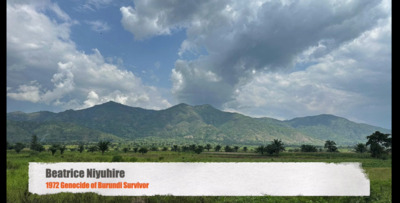
Niyuhire, Béatrice
Béatrice Niyuhire
In 1972 when the crisis began Beatrice lived at Isabu in Gisozi. At school, they started to see the Tutsi children standing in groups but they didn’t understand. They heard them saying the mulele rebels were at Rumonge after they said that Mulele arrived at Mugamba. They saw at school that the children of Tutsis began to scold them. Then there occurred a time when they said that the patrols had to take place to block the mulele so as not to reach the countryside. Tutsis who lived in Isabu were telephoned and asked if they had not begun, they were asking them if they hadn’t begun to kill hutus. Beatrice’s father told them that they would be killed any time, there was one person from Bujumbura who told them that if they had somewhere to flee to, they should flee because not Mulele were not targeted but hutus. On Sunday they began to take away people, they went to knock on the door of the home when they opened, they embarked them into the truck, they arrested men. So they took Beatrice’s father, they imprisoned him, when his family members went to see him after two weeks, they were told that he went to Muramvya to lie there, then they never saw him, he was killed. Beatrice also missed her brother in law. At that time Beatrice studied in seventh grade but she dropped out after studying two terms. Perpetrators who took away her father also took him with other eight men, and they were transported by the administrator named Ntarwarara Antoine. When they arrested them they told them that they went to justify themselves and that they would return back but they didn’t come back. There were other people who were sent by the administrator Ntarwarara to arrest hutus, like policemen. They killed them with bamboos and spears and they said that they were killing traitors. After killing them, they went to loot their things. They looted their clothes, all cows, and cows were taken by the administrator of Kayokwe commune. They looted their cupboards, chairs, and harvested their fields. Beatrice missed her uncles and her uncle’s sons, they missed seven members in their family. She also missed her brother in law. Her mother continuously fled to other countries, Rwanda, Congo,Tanzania, she suffered too much. Her life became very difficult since she missed her husband.
Beatrice ends by advising perpetrators that it is not good to hurt human beings like you, plundered items are not beneficial. According to her, Burundians should forgive one another in order to live peacefully. Youth should act and think about their future and not grow up following unimportant things they were told by their ancestors. What is good is to be committed to development.
-

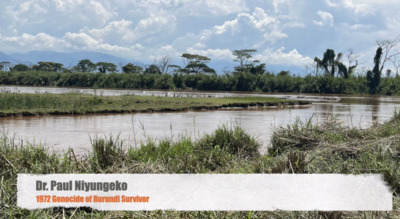
Niyungeko, Paul
Paul Niyungeko
Paul Niyungeko was born in 1964, in Kinama district in Buyengero commune; it is at the border area between Buyengero commune and Songa commune which is commonly called Songa Manyoni. He started primary school at Mudende, in the 1972 tragedy, he moved to study at Rumonge, after that year he returned back to Mudende school where he studied until the sixth grade. He was oriented to the school he really longed for, Teacher training School of Rutovu, called “Ecole Normale de Rutovu” where he studied from seventh to 14th grade with a D7 diploma.
In... 72 many students dropped out of schools including Paul’s siblings, some parents said, "These atrocities have taken so many people; if we send all our children to school we might lose all of them as we have lost other friends and relatives." What Paul remembers is that in 1972 what brought fear and panic was a rumor saying that there were people who were burning the party’s permanences, the Uprona party, and then some permanences which were near their locality were burned.
The other thing he remembers is that it was reported that there was an administrator called Bourgmestre Kimaka who was killed in Rumonge near the market; then it was said that there were people who invaded named “Mayi Mulele”. They said that the invaders came with machetes, that even the guns could not shoot them while they were saying, “Amazi masa Mayi Mulele” As it was said, “These kinds of people were the ones who invaded”, but what they realized, they did not see anyone who was called Mayi Mulele. They heard it as a rumor, but what Paul witnessed, there were people who were arrested, bound and he heard that others were taken to the location called Gitandu. There were also reports that some of them were taken to Manyoni in the current commune of Songa, those who arrested them did not take them back, and no one returned. There were their neighbors who were arrested.
He remembers a story that hurts him all the time, there was his neighbor, Mujegetera, who was arrested and they put him in something called a barn (A barn was a loft weaved in the palm branches and then, which is as long as one can sleep in as he sleeps on a boat or in a dock), they tied his hands and feet, the man had a mustache and then they brought a fire starter and burned his beard and then they took him away. When the situation was worse they escaped and fled into the bush, sometimes they hid themselves especially in the fields of beans and cassava. He remembers how they could see a plane hovering over them, when their parents saw it over them, they could see that they were crying out for help with great fear, they raised three fingers, Three of Uprona.
During that period there were many victims: students who were in boarding schools, the parents were worried that theirs would not come and that there are many who have been massacred at school, they did not come back and did not return anymore. Among those pupils were Pontien, Pierre, and others. Students at different schools in the country were killed, others were said to be kidnapped by soldiers, and others arrested on the way home.
Paul’s father, who was a catechist once went on God’s mission, when he returned, a gunman stopped him, when he was preparing to shoot him, others who were with the shooter knew him as a perfect person, so they exclaimed to forbid him to kill, but he risked being killed. At the school where he studied, Mudende elementary school; almost all the teachers except one teacher who taught them in the second grade, all of them were killed. They realized that in... 72, a number of government employees, almost all of them; salespersons and traders, were killed by perpetrators. A number of the remnants of the carriages of the wealthy merchants, were widespread in the markets, especially in a marketplace called Manyoni. It was horrible and there were some barriers called vigils, to keep vigil, that is, adults, the heads of families were forced to go to barriers saying, “They are going to keep vigils”. At that time, some people went but they did not come back. They did not come back. When Paul’s father went to Burambi, he spent a month and half, but he returned by the time his family got worried. When he arrived, he told them that many people who went there were killed.
Another sad story is that the JRR, the youth affiliated to the ruling party, Uprona; the JRRs were the ones who were in charge of arresting people, they were in charge of tying them[victims] and also taking them to the zones and to the communes, those who were taken away did not return. President Micombero was advised by Bishop Bernard Bududira to declare a truce by saying that peace had been restored; but even in 1973, the war had not yet ended.
Paul gave abundant and important advice: when it comes to ethnic issues in Burundi country, the first solution is one-on-one talks between parents and their kids, parents whether they are Hutus or Tutsis, one would advise them, especially to teach love to their children, to teach unity, to teach mutual assistance until they realize that ethnic relations are lesser than economic ties. If these one-on-one sessions fail at home, it won’t be efficient when they become adults.
Secondly for young people, all the authorities who are in leadership to stay in power or to come into power, they often achieve that goal by using manipulation of ethnic identity. A person who knows nothing about ethnic groups and doesn’t have any benefit may be manipulated in such a way to the detriment of another person, a young person who is completely innocent.
He added that people need to be taught how to distinguish between grass and yeast. The teacher of racial hatred had better first come to his senses and know that his hatred is vain.
And then for adults as well as people who are involved in these crimes or who manipulated others, he advised them to first apologize to the victims. They have to feel guilty, reach out to their victims and apologize because anyone who dares to exterminate his neighbor's household, his Burundian relatives arguing that they do not share the same ethnic groups, and especially as ... in 72, tutsis massacred the Hutus. Those things are very bad, the perpetrators have to regret and apologize.
He advises the administration authorities and the justice officials to stand up and closely monitor the perpetrators of the genocide and then uphold the rule of law.
International communities are requested to give their support; those who are in power had better be in contact with the international communities and especially for missing families, there are widows, there are orphans, there are people who are really depressed whose hearts were broken, who have lost their belongings, there are also those who were traumatized. All of them need rehabilitation. They should make a special effort to compensate these families. To conclude, he reminds all Burundians that Burundi is their motherland even if a given ethnic group dies off the remaining group records a loss because they are interdependent. God's vengeance is the best and the rule of law can take revenge against them, not in the sense of doing evil but in the sense of suppressing misconduct. He advises anyone who could listen to him, “Never again” “Never again”
-
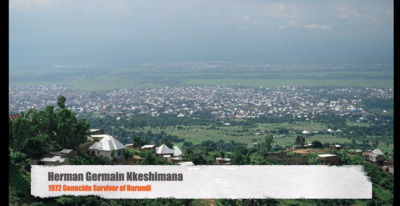
Nkeshimana, Germain Herman
Germain Herman Nkeshimana
Germain Herman Nkeshimana was born in 1959 in Taba village, Songa commune, Bururi province. He started elementary school in 1966 at Rumeza until the seventh grade. He studied the eighth and ninth grade at Giheta, he continued his studies from the tenth grade to the fourteenth grade at Kibimba where he graduated in pedagogy. He taught there at Kibimba for two years. He went to the University and there he studied in the faculty of psychology and Educational Sciences. After that, he taught at Pedagogic Lycée of Mweya in Gitega province. Apart from what he had studied when he was at his job he studied journalism and he got foundation certificate (.) journalism level1: Collection and information treatment, he studied Management of Public Finances, then he got diploma of a trainer of Public Finances Controllers. In 1972, when the tragedy came out, Germain Herman was studying in sixth and it was on 29th April when they heard on the radio that a crisis started in Burundi, that there were people who were called Mulele who killed others. And at that time, even schools stopped for a little moment and they saw that something changed. After school closed, children stayed home and fathers started to do night guards and their camp of guarding was there near Tagara school. They could see them lighting the fire the whole night in the aim of arresting Mulele people from Rumonge because they said that Mulele people attacked from Rumonge. After some days, their father said to them goodbye and they told them that they were going down to Rumonge; they said that there was an assembly in which they said that every adult boy and every man who had a spear or any other thing had to pick it so that they could go down to Rumonge at Mutambara to help support soldiers to fight against Mulele. Their fathers went; in families, there remained women and children. After a moment, their fathers came back from Rumonge. Herman remembers that when they arrived at Manyoni, there was an authority who held an assembly; they were still young children, and they went to stand by near the men who were listening the assembly; the authority said “Ladies and gentlemen, you know that the war started, but, now peace had implemented again in Rumonge, we won the enemy, but the enemy is between us”. Their fathers had already hiked from Rumonge. After the assembly, the first Hutu people were arrested at that time and they were brought to be imprisoned at Songa zone. After that, the following days, they used to say; “someone has been taken away, this has been taken away”. They saw trucks transporting people; after the Songa jail was full, there was a truck which had to come and take away all the people but they didn’t know where they transported them, they thought that they were bringing them to mass graves or elsewhere. Those trucks took those people a lot of days. People were crying when being taken away, lying in opposite ways and tied. Then, to know that they lost his father, when he arrived at Manyoni in a way from Rumeza primary school, he saw a hat down in the street and he saw that it seemed like his father’s hat, a hat that seemed it had been casted down in the shit it had been floated; then he became sorrowfully angry and fearful in his heart. Arriving at home, his mother told him that his father was taken away. When taking them away they used to beat them. The following day, her mother started to bring food to his father, because, when they were still there in the jail at Songa zone, they used to bring food to them. She brought to him food once, twice, third and after, she brought back the food. Her husband was no longer alive; after a long time, Nzeye told them he had seen his father dying there at Manyoni to the zone, that they bumped his head into a stone and they put him in the hole, then they knew that his father was in the Manyoni common grave. The JRR people were the ones to take away people one by one. There were people who used to come there and obliged them to give cows to authorities so as their father may be released (.) they gave about two cows to release him, but it didn’t work. Apart from his father who was killed in 1972 tragedy, they also lost other relatives and neighbors: his paternal uncle: Dismas Kangurunguru, her maternal two uncles among them was Gabriel Kaburagiye who was a teacher at Nyamugari at Bururi. All people who had died, they named them traitors, widows had been given a name of traitors’ women, orphans were called traitors’ children; that was traumatism and terrorism on the high level. Marc Nyungunganya who was Herman’s family member, he at that time was teaching in first primary school, he had been swindled by Tutsi teachers by telling him to go to get his salary in Bururi because it was at the end of April. When others went to get their salaries, they came back, but him; he didn’t come back. Other teachers like Gitengeri who was a primary school teacher, took him and he died, Sebatien Rizi, Pascal nicknamed Ruhigi and Jean Buhuragiza were lucky to flee in the priest’s homes, they were being pursued. They spent time there, but they looked for them from there because they came several times to the priest to ask for those people, and the priest settled them and they brought them to Bururi in jail with my Bishop Bududira standing by so that they may not kill them. The piece of advice Herman gives is from the Ecclesia teachings, “you see that a man is created by God, that means that no one has the right to kill him. Only God who knows his destiny. Even the national protocols prohibit killing each other; that’s why we have to respect God's commandments and the one of the country, to respect humankind's life, to respect man's dignity”.
-

Nkunzumwami, Pimako
Pimako Nkunzumwami
Pimako explains how during the genocide in Burndi, violence seemed to have been orchestrated against Hutu intellectuals and wealthy individuals, including the interviewee's father. His father was arrested in 1971 and imprisoned under accusations related to political betrayal and theft. This arrest was linked to a larger campaign of violence against the Hutu people. The father was later taken away by a car, presumably for execution, which left the interviewee and his family in a state of uncertainty and fear.
In 1973, fearing for his life, Pimako fled to Tanzania. After receiving reassurances that the situation had improved, he returned home. However, he found that the violence and loss had not ceased. He goes into detail in regards to the confiscation of his family's property, including land and livestock, by those in power who accused them of being "children of betrayers." This theft was part of the broader violence against Hutu individuals and their families. The interviewee speaks about the hardships of surviving the violence and the continued struggles to reclaim lost property and seek justice. Despite these challenges, he expresses gratitude for still being alive and the resilience to continue speaking about these experiences.
-
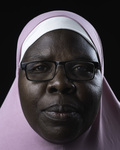
Nkurunziza, Yvette
Yvette Nkurunziza
Nkurunziza was an infant when her father was murdered during the 1972 Genocide of Burundi. Her father was a customs officer and a respected community member. Military officials arrested her father on his way to work, and he was never seen alive again. After his death, Nkurunziza explained her family’s living conditions worsened, and her mother sent them to live with their grandmother. Nkurunziza explained that because Tutsis killed her father, she was raised to hate Tutsis because all Tutsis were terrible people. However, Nkurunziza is proud to share that her daughter-in-law and grandchild are part of Tutsi, and there is no room for hate in their hearts. Now, she hopes the youth study the past so that this mass atrocity never happens again.
-
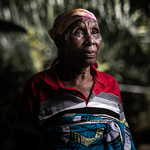
Nsekerabandya, Cécile
Cécile Nsekerabandya
Nsekerabandya Cecile was born in Buhonga about 1950. She did not get school education, she was married and they gave birth to eight children. In 1972, when the tragedy happened, she lived in Bwiza and she had given birth to the first child. At that time they started to hear armored military cars shooting and shooting; they asked what it was and they told them that the tragedy happened. They heard that they began to arrest intellectual people from their houses, they didn’t know where they took them to. Perpetrators were wearing military uniforms. They arrested people, took them away, killed them and threw them into pits.
Her brother who had studied until the sixth grade was killed during that tragedy, they killed him in Carama near where he lived. Cecile and her family fled, like other people during that tragedy, they fled to where they were put in tents. Her husband was Jean Berchmans Bibonimana. He died because of illness some days after the tragedy.
Cecile says that if they had known people who killed her brother, they would have forgiven them because what happened happened and there was no other alternative.
Another thing Cecile proposes is that in Burundi, there should be a monument built for people killed in 1972. She also says that they tell the Burundian youth what happened, but even though they tell them those things, they should not be jealous because of that. Jealousy should be abolished and stopped in people’s hearts.
-

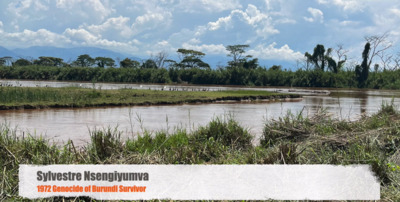
Nsengiyumva, Sylvestre
Sylvestre Nsengiyumva
Sylvestre lost his father, Mark Ndayizeye, in the 1972 tragedy. His grandfather also perished in that tragedy. He also lost his uncle father Martin Gakwavu and his little uncle Dominic Nkanage, they also killed other salesmen. People who were arrested in Kirundo province were killed in Vumbi. Ndabaneze is the one who carried the father’s Sylvestre in the jeep, after killing his father in …72. Ndabaneze and his driver took the car of his father, he died in Vumbi, his father died having three cars. After he died they robbed them of their possessions like cows and all the cars, a deposit of sorghum and beans, money. In …73 they said that mulele had cracked down and told people to go to cut grasses in Yanza after they killed the hutus who were in Yanza. Sylvestre Nsengiyumva was in 6th grade and his schoolmates began to persecute him accusing him of being a kid of a Traitor [Umumenja in Kirundi]. When they sat for the national exam, Sylvestre and his other Hutus classmates were not given a certificate allowing them to go to 7th grade. Their certificates were instead given to the Tutsi who didn’t pass the test. Sylvestre was traumatized when he went to school and dropped out of school, including his little brother and sister. In …65 the father of Sylvestre was imprisoned due to politics, the teacher named Migeregero also was imprisoned.
-

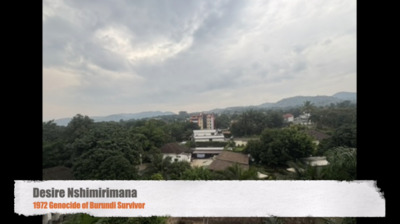
Nshimirimana, Desiré
Desiré Nshimirimana
Desiré Nshimirimana was born in Nyagatovu village, Vumbi commune and Kirundo province in 1965. He studied until the sixth grade in elementary school. His father, Kamana Raphael, was the headmaster of the elementary school; his mother, Gahigi Goderiva, was an elementary school teacher.
In 1972, when his father was coming from work in the afternoon, they saw a truck coming; It came right when he was going to eat lunch. When he got to the table, the servant brought food to him. He didn't eat it, they suddenly saw a truck coming, and soldiers entered the house. They lifted him up and tied him up. After they tied him up, they threw him in the truck. After they threw him in the truck, they came back later to search things in the house. He had papers in a cupboard, he had safes where he could keep medicine and money, they scattered everything and left it open. His family didn't know what they took away, but they robbed medicine and money. His family members thought that he would come back but the only thing that made them suspicious is that they just laid him down and put a tire on him, and sat on him in front of his family. They transported him and later his family heard that they brought him to Vumbi. They waited for him to come back for a long time and they lost hope. After losing hope, his children grew up and learned that he was killed because they charged them( his father and other victims) of stealing the government's treasury, they heard it as rumors.
They later harmed his family member, the same people who took him away, including the local authorities of the commune, including the administrator named Gahima and another local Authority of Nyagatovu called Ivo Barampama raped their mother after the death of their father because their father was a Hutu and their mother was a Tutsi woman. Then they both married her and those children, orphans, remarked that their mother conspired to kill their father.
After that, Desire and his siblings started having a lot of problems, they plundered their properties, there were properties that their father had bought, the authorities of the time, Ivo and the administrator of Vumbi commune sold the property that he had bought on Nyamyumba hill. When they filed a lawsuit, they told them that it was not possible because the property was sold by those Authorities together with their mother, they then gave up and they lived badly in extreme poverty and traumatism. There was a time they arrested Desire in the following years; they accused him of being involved in political affairs of political parties. After they imprisoned him. It was in ...86, they locked him up and it was seen that he was accused of his ethnic belongings because at that time it frequently occurred. He couldn’t talk to the administrator who was ruling there, he was also a Tutsi, he saw that he was falsely accused, and he released him. When Desire arrived at home, he saw that the consequences were bad and their life was very bad.
When they arrested their father, they didn't bring food to him because their Grandmother and Grandfather warned them that if they went there, they would be killed like their father. Ivo Barampama was the one who raped their mother, he was the Authority, he was the head of their village. At the beginning the administrator Gahima used to spend nights with her but after he left and the head of the village replaced him. He was also the one who sold their property.
When his father was alive, he helped sick people and took them to the doctor. He also had other boys who lived in their house, like Sekerabandya Reveriyano, whom he had been supporting. After he died, they dropped out of school. Reveriyano was their neighbor and he was in the eighth grade.
When Kamana was still alive, his family was really comfortable, they didn't lack anything: clothes, drink, food etc. After he died, they all lived a bad life. Her brother Ndayisenga Jean Pierre who was a student failed in 6th grade, their grandmother took her to Muyinga to help him in school life but he didn’t succeed. Their mother had financial means because he was a government employee, but she didn't want to help them because she engaged in loving men, those men came to sleep with her and she minimized her children’s school education. Desire and his siblings could even go to sleep on an empty stomach, though she was paid money. Their Grandmother tried to support them, she offered them school materials, school fees and clothes. Desire also recounts how they went with the former governor of their province Nankwahomba Melchior, he was his classmate; they went to sit for the test and they saw that they passed it but because there were ethnic divisions, they told them that they failed. They attributed their grades to other tutsis.
For the 1972 killings, it was truly strange, perpetrators targeted a given ethnic group. The wish of Desire is that ethnicities should be abolished completely. Those who still have that ethnic spirit, the tendency to do harm to their fellows should stop because these things are worthless, many of the people who committed them are dead. Things like shed blood don't make a person live longer, they only cause enmity against people.
-
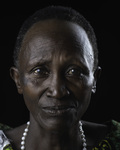
Nshimirimana, Pascaline
Pascaline Nshimirimana
Pascaline Nshimirimana said she saw soldiers break through her front door demanding to know where her father and uncle were located. She watched in paralyzing fear as the soldiers took her father and uncle, forced them into a car, and drove away. Her family never saw them again. Pascaline said she and her four siblings retreated deep into the forest for safety. She explained that she and she hid in the forest for three days until their grandmother and a group of neighbors came searching for them. The children wanted to cry out for help, but Pascaline said they were too weak from hunger to speak loud enough to be heard. She said when the search group finally found them, siblings, the adults cradled the children, loaded them onto their backs, and carried them to their home. What should have been a moment of relief quickly turned to horror as Pascaline saw a military helicopter land outside her family’s home. The soldiers were looking for her other uncle, and once again, the children were forced to hide in fear. Unfortunately, the trauma did not cease after this incident. Pascaline observed perpetrators taking people from their homes, and she lived her life in constant distress as her country was under attack. Pascaline said her father and uncle worked for the local administration, and her aunt was a nurse. She believes that they were targeted because they were intellectuals. Pascaline said her grandmother struggled to support five children and worked incredibly hard to keep them fed.
-
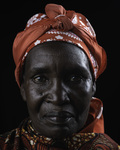
Ntawumbabaye, Clotilde
Clotilde Ntawumbabaye
Ntawumbabaye said that in 1972, at age 14, she was in her family home in Gishora when she looked out her window and saw a machine digging up the surrounding land in her community. Horror consumed her as she watched a large truck unload dead body after dead body into the hole. The digging created a mass grave that would be utilized as a crude vessel for human remains. Day after day, the same machine would come to dig the land. Ntawumbabaye would watch truck after truck come to dump bodies into the grave. She later found out that her cousin was taken away, murdered, and tossed into one of the mass graves. She watched the perpetrators dig. Her uncle could not do anything about losing his child. Mourning was forbidden and punishable by death. Rather than seek justice and peace, Ntawumbabaye and her family were forced to walk past the mass graves every day as if they were not there.
-
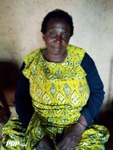
Ntiranyibagira, Zerida
Zerida Ntiranyibagira
Zerida lost her brother Ngendakuriyo Elidad and other relatives in the 1972 tragedy. Elidad was working in Bujumbura. After he disappeared, the family was told later that Eliphaz, a coworker and native of the village, was behind the arrests. He knew him and he pointed out that he is a Hutu. The perpetrators came to arrest him. Zerida was a student in Karusi teacher training school. Hutu students were protected by the heads of the school; none of her classmates were taken away. But they watched through the windows pastors, teachers and other residents of Buhiga being arrested and loaded in trucks by soldiers. Her parents at home, afraid of being arrested, stayed in hiding. They had Tutsi neighbors who protected them, they often came in secret to tell them when and where to hide. Other brothers of Zerida fled the country, their children were distraught, and other siblings dropped out of school. Her elder sister's husband also died. Her brothers-in-law were also killed. The five siblings who were left then ran away, her brother's documents were taken away, his Vespa[motocycle] was also taken away. The perpetrators also looted her family's properties. Zerida and her family stayed in a great desolation.
-

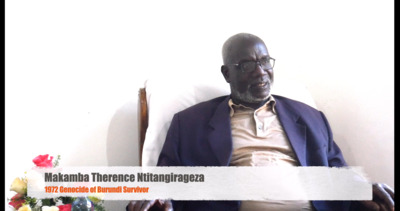
Ntitangirageza, Therence
Therence Ntitangirageza
Thérance Ntitangirageza is a priest who was born in 1957, in Vugizo commune, Makamba province. When the 1972 tragedy happened, Thérance was at school in Buta seminary. As the school was ruled by priests they didn’t tell them openly what was happening in the country.When they came back at home for holidays, they found that people who were there, were not there anymore, so a lot of people had been killed. Many neighbors were killed, but not close members of Thérance’s family. At school they had seven teachers but only two of them were still alive. Seeing what had happened, people were flabbergasted, they noticed that hutu people were persecuted. The perpetrators and tutsis were protected by the leadership of that time. It was something which had been prepared and the government didn’t stop it. Hutu people were thunderstruck. Clever and rich people were killed, others escaped and went away in Tanzania and elsewhere.
Before the tragedy, there was a normal relationship between hutus and tutsis, but after it the relationships between the two groups broke. It was really a situation of suspicion, fear and terror for the hutus and on the other side of tutsis there was arrogance and impunity; that was transmitted to young people who were coming from those schools without any idea of division. There was an open impunity and arrogance of the regime so the Tutsi students felt protected and friends of the regime and the others felt to be victims, so they had to keep quiet and were still afraid of doing any fence movement or something which could be the origin of something bad for them.
According to Thérance, the future of Burundi country is a very big question because ethnic conflict is one of the problems which prevail. The worst thing done in that country is to emphasize so much on ethnic differences and conflict, forgetting that there are other realities and other problems which should be dealt with. According to him Burundians need leadership which really has to focus on the matters of well fair economic development in order to solve even other questions.
-

Ntunzibigaba, Sereniya
Sereniya Ntunzibigaba
Sereniya Ntunzibigaba was born in Murungugu subvillage, in Mabayi commune, Cibitoke province. She didn’t get school education, she had two siblings but one of them was killed in 1972. During that period, she missed a lot of people: her husband, her two nephews, her grandson and her sister in law.
Her husband was a teacher, he taught at a catholic mission, he used to work and came back home for lunch. Sereniya was informed by her husband’s colleagues that her husband was taken away from job. They gave her the message he sent to her, that she should not go to look for the money he had saved at Fadara’s, and that he would return back by God’s sake, he sent to tell her to send him money and coat because he thought he would return back. He didn’t know that they took him to be killed. He was called Prosper Rwabaye. He left four children, three girls and one boy.
There was a man who attempted to remarry her, but she refused and decided to remain a widow and raise her orphans. Her husband died on Wednesday whereas she had gone out from postpartum period on Monday. What shocked Sereniya was that her husband was killed without enjoying the son he had envied for a long period.
When they took him, they said that it was the money they had stolen, his mother came and told sereniya; “ Give me the money so that I go to pay it, maybe he hid it on the house roof”. They sent the housekeeper, he went up to the roof and he didn’t find it. That was the lie, the rumors spread by people. He was the first one they arrested in that area with a certain doctor who was at Mpinga.
There were some people who were stabbed and thrown into pits. Sereniya’s sister in law was killed with her child while bearing another on her back. Sereniya went to pick up the baby she was bearing. When sereniya’s family saw that, they decided to run away to hide themselves in forest, she went with her four children. Belongings of her husband perished after her husband’s death: cows, goats and pigs; perpetrators looted them. Sereniya made her elder daughter dropout of school in order to help her to raise other children as they lived in very bad conditions of poverty.
Sereniya said that she gave up the matters of those killed but she said that whenever she sees her husband’s photo, tears flow from her eyes. She said that if she met perpetrators who made her a widow, she couldn’t forgive them but she gave up that matter.
-
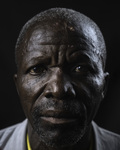
Nyabenda, Deogratias
Deogratias Nyabenda
Nyabenda said soldiers disguised in the same camouflage as the rebels weaved their way through tall grass, armed with machetes, and started to kill any male in sight. Nyabenda explained that the soldiers told everyone to gather at 4 pm because the Hutu and Tutsis had established a peace treaty. As all the male citizens arrived for the meeting, they began to get slaughtered one by one. By the time the rebels realized they were being ambushed, many of them were already dead. Soldiers continued to flood Vuzigo, and Nyabenda said it didn’t matter if the victims were Hutu or Tutsi- anyone present was at risk of being killed. Among those who perished were Nyabenda’s father and three uncles. After his father died, Nyabenda shared that his mother became too traumatized to care for him. He became an orphan and made his way to Rwanda. Now, more than five decades later, Nyabenda said he hopes the next generation of Burundians learn their country’s history to prevent mass atrocities from happening in the future.
-
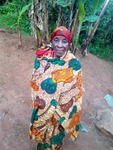
Nyabenda, Yozefina
Yozefina Nyabenda
This interview unfolds a personal experience of the tragic times in Burundi in 1972, during a period of intense ethnic violence. Yozefina describes seeing the abduction and likely execution of many people in her community. She recounts how innocent people were forcibly taken away, often at night, and never returned home. Yozefina and others were told to hide in forests to avoid being captured, and she describes a true sense of fear and helplessness in 1972.
The interviewee describes the violence as seeming to be selective, targeting those who were considered to have wealth or status in the community. Yozefina’s husband was among those captured, and despite her attempts to seek more information, the whereabouts and fate of those taken were left unknown. The brutality expanded to looting and burning of homes, and those who had belongings or were perceived as wealthy were the main target.
She also emphasizes the atmosphere of terror and the inability to seek help or answers due to the fear of further violence. Yozefina describes the trauma of losing loved ones without any clear knowledge of their fate.
-

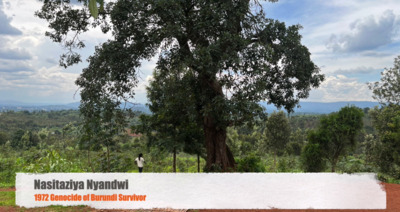
Nyandwi, Nasitaziya
Nasitaziya Nyandwi
Nasitaziya Nyandwi alias Sindiwenumwe was born during the regime of prince Basagwe at Buyengero and prince Ndarishikije who lived in Taba in Bururi province. She was born in Horezo village, Songa commune, in Bururi province. She recounts how they witnessed people taking their husbands to go to patrol and thereafter, they didn’t return back, they got information that they were killed.
People missed their relatives but they didn’t mourn, they didn’t bury them. Anastasie missed her husband in the 1972 tragedy, the tragedy started when she was in Runyinya in Musenyi, her husband left her with three children, she described how they lived harmoniously with her husband, and how she suffered after her husband’s death. Matabura and Ntibaneneje were together with tutsis who took away her husband. Tutsi people rounded up hutus, took them away and killed them. There were also some hutus who were associated with tutsis to kill other hutus, and together with tutsis they celebrated parties, danced because of Hutus’ death. They sang saying that they had put away their enemies from their necks, among those hutus, there were her father-in-law, and segikwega.
-

Nzobonariba, Philippe
Philippe Nzobonariba
Philippe Nzobonariba was born in Muramvya province, Mbuye commune, in Gasura village in 1955. During the tragedy of 1972, he was a student at the Jesuits high school which is called Holy Spirit or Lycée du Saint Esprit of Bujumbura. He was 17 years old and he was in tenth grade. At that school, many of them were foreigners, and their headmaster was called Father Seigneur, he was very important because when tragedy started, he decided to close the school. He forbid them to go out, no one could not enter into school and even those who were studying without living in campus at school, they tried to keep them in internal boarding school, in that way no military were able to take students away, except in beginning days when four students and one Burundian teacher were taken away to be killed. Afterwards it didn't continue, but the teachers who were just doing internships, who were from the University of Burundi, were taken and killed. The father Seigneur who was the headmaster responded quickly and just stopped killings; the situation became very hard when they went on the holiday. Some regions had been touched more than others for example Rumonge, Bururi, Makamba. When students went on holiday their parents were killed, others had fled to other countries; so instead of going to holidays, they went to Republic Democratic of Congo but some who managed to come back, they finished the year and they continued studying.
In Philippe’s family, a direct cousin was killed and in the region, there were those who were killed especially teachers, they killed about seven, because they were looking for people who were educated and those who were becoming a bit rich especially traders, so they killed seven teachers and eight peasants.
After they heard that Philippe’s cousin was killed, in his family, they were afraid. They thought Philippe was also killed and the killings happened in the months of May, June. In July when the students went on holiday, they just saw him and they were very surprised. When the other year started, they tried to prevent him from going back to school in September but finally they let him. When they went back to school those who went out of the school were killed by the military.
Philippe could not forget what happened in 1965, he was ten years old, he saw some of his teachers being taken away. He was in fourth grade and they said that there had been killings in area called Busangana in Bukeye commune, they saw people arresting other people took them away to kill them. Four of their teachers were taken and killed and there was also another elected member of the parliament who was killed: Benyuje Emile and others: The directors of school, the headmasters of the schools, those who were in the parish. It is in that period that his father in law was taken to Muramvya and killed; he was the judge in the court of Mwaro, his name is Gihwinyirira Raphael. His teachers killed were Nsezere Etienne, Zambiriti, Sabwigi, he was the headmaster of the school, and two others, all they killed in their area were six. The house of the member of the parliament Benyuje was also plundered; it was near Kiriri, and even now their children are following the case in the court.
According to Philippe, in Burundi, a memorial should be built to remember people killed in those tragedies, and that in each province, this is how it is done even in other areas too. He wishes the best for Burundi where someone either the rich or the poor live peacefully and work without being accused or died because of his ethnic group.